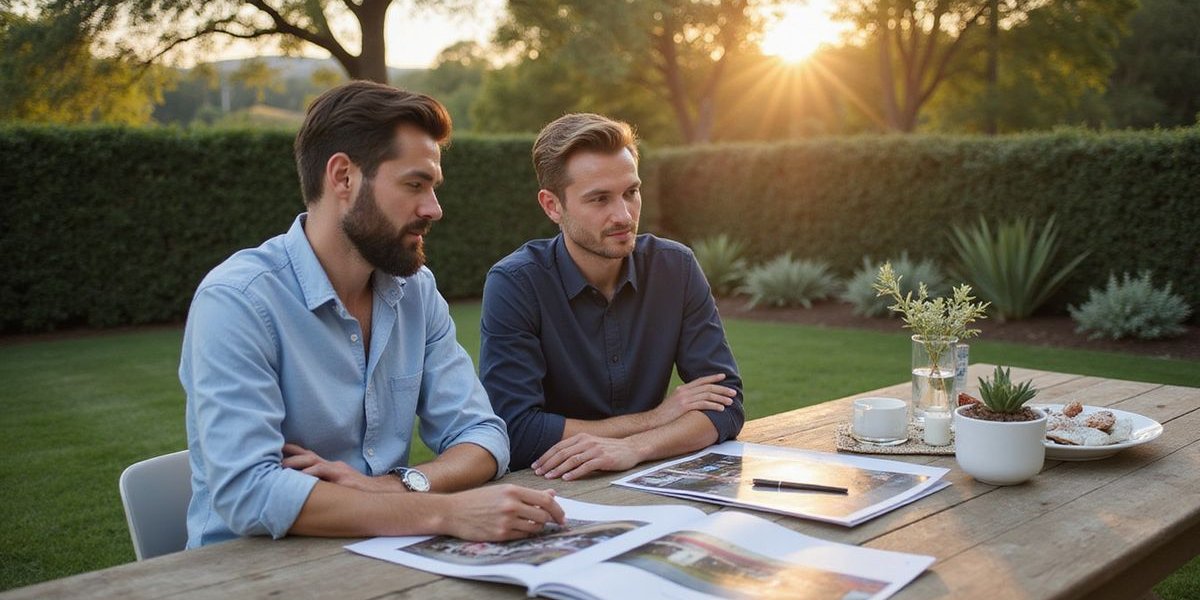
How to Prepare for Your Landscape Design Consultation
A landscape design consultation is the first step toward transforming your outdoor space. Making the most of this meeting helps us understand your vision and ensures we can provide accurate advice and pricing.
Here’s how to prepare for a productive consultation.
Before the Consultation
Gather Your Inspiration
We recommend starting by collecting images that appeal to you. Seeing what attracts you helps us understand your aesthetic preferences, even if the images vary widely.
Try these sources:
- Save photos on Pinterest or your phone
- Tear pages from local magazines like Australian House & Garden
- Screenshot gardens you’ve photographed in your neighbourhood
- Note gardens you’ve visited that you loved, perhaps from the Melbourne International Flower and Garden Show
Think About How You’ll Use the Space
Our team needs to know how your lifestyle dictates the garden’s function. Consider these questions to help clarify your needs:
- Do you entertain frequently, and if so, do you need a seated dining area for 8 or a casual fire pit for 4?
- Do you have children, and do they need a flat lawn for cricket or a designated play zone?
- Do you have pets, and are they diggers or runners who need secure fencing?
- Do you enjoy gardening every weekend, or do you prefer a “set and forget” maintenance schedule?
- How much time do you spend outdoors during Melbourne’s cooler months?
- What activities happen in your garden, such as yoga, reading, or large family BBQs?
Note What’s Working and What’s Not
We find it helpful if you walk through your current garden before we arrive. Take a hard look at the existing conditions:
- What do you like about the existing space (e.g., that mature Elm tree providing shade)?
- What bothers you most (e.g., the swampy patch in the back corner after heavy rain)?
- Are there plants you want to keep, especially those protected by a Significant Landscape Overlay?
- What structures or features should stay?
- Where are the problem areas, such as cracking retaining walls or uneven paving?
Understand Your Budget
Our experience shows that having a realistic budget range is crucial for a feasible design. Costs in Melbourne have shifted in 2026, particularly for materials and trades.
Insider Tip: Many homeowners overlook the “slope tax.” If your property in the north-east has a fall of more than one metre, you should budget an extra $10,000 to $15,000 per metre of fall for excavation and retaining walls.
Use these 2026 Melbourne market estimates as a guide:
| Project Level | Estimated Cost Range | What It Typically Includes |
|---|---|---|
| Basic Refresh | $15,000 - $35,000 | New planting, mulch, turf, and minor paving repairs. |
| Standard Renovation | $50,000 - $90,000 | New layout, some retaining walls, paving, and full planting. |
| Premium Transformation | $150,000+ | Structural earthworks, pool surrounds, lighting, and advanced materials. |
| Design Fees | $2,500 - $15,000 | Concept plans through to full construction documentation. |
You don’t need an exact figure, but a range helps us tailor advice appropriately.
Locate Property Documents (If Available)
We can provide much more specific advice if you have the right paperwork. These documents tell us what is legally possible on your land:
- Title Re-establishment Survey: This is critical for confirming your legal boundaries, as fences are often incorrectly placed.
- Section 32 (Vendor’s Statement): Often contains details on easements and covenants.
- Sewer and Drainage Plans: You can get these for free via the “Before You Dig Australia” (BYDA) service.
- Overlay Information: Check if your property is covered by a Significant Landscape Overlay (SLO) or Erosion Management Overlay (EMO), common in areas like Manningham and Boroondara.
Don’t worry if you don’t have these right now. Our team can help you source them later if needed.
What to Expect During the Consultation
Site Walk-Through
We will walk through the property together to assess the physical realities of your block. This on-site assessment covers:
- Your vision and priorities
- Existing conditions, such as soil quality (clay vs. rock) and drainage patterns
- Opportunities you might not have considered, like capturing northern light
- Potential challenges and solutions, especially regarding slope stability and access for machinery
Discussion of Options
Our designers will use this time to brainstorm initial ideas with you. We will likely discuss:
- Design approaches that might suit your architecture (e.g., Modern Coastal vs. Bushland Sanctuary)
- Materials and styles to consider, focusing on durability in Melbourne’s variable weather
- Rough scope of what’s involved, including necessary permits
- Staging possibilities if the project needs to be built in phases
Questions We’ll Ask
We need to understand the constraints and opportunities of your specific site. Be prepared to answer:
- Your timeframe expectations (planning permits can take 3-6 months in some councils)
- Who else uses the garden
- Future plans, such as a pool or home extension
- Your relationship with neighbours, which impacts screening and privacy
- Any council or body corporate restrictions you are aware of
Questions You Should Ask
You should feel confident in the team you hire. Ask these questions to gauge fit and expertise:
- Have you completed projects in this specific council area?
- What’s your design process for sloping blocks?
- Who would build the project, and do you have preferred contractors?
- What’s included in your fees, and are council submission fees extra?
- How long does the process take from design to completion?
After the Consultation
What We’ll Provide
We typically send a follow-up email within a few days of our meeting. This package usually includes:
- A summary of what we discussed
- An indicative scope of work
- A fee proposal for design services
- Expected timeframes for design, approval, and construction
Your Next Steps
Our proposal is your roadmap to moving forward. Once you receive it:
- Review it against your priorities and budget
- Ask questions about anything unclear
- Discuss with other household members
- Let us know if you’d like to proceed so we can book your site measure
Tips for a Great Consultation
Do:
- Be honest about your budget range so we don’t design something you can’t build
- Share concerns or constraints early
- Mention any deadline pressures, like a wedding or property sale
- Tell us about past experiences with trades (good and bad)
- Ask questions about maintenance requirements
Don’t:
- Feel you need to have all the answers
- Worry about having “bad taste” or conflicting ideas
- Hide problems like poor drainage or known underground pipes
- Commit to anything on the spot if you need time to think
Ready to Schedule Your Consultation?
We offer complimentary on-site consultations to discuss your project. It’s a no-obligation opportunity to explore what’s possible for your outdoor space.
Book your free consultation today.
Written by David Claude
Award-winning landscape designer with 30+ years experience creating stunning outdoor spaces across Melbourne.